

Raúl Jiménez seals Mexico’s win against nine-man South Africa in World Cup opener
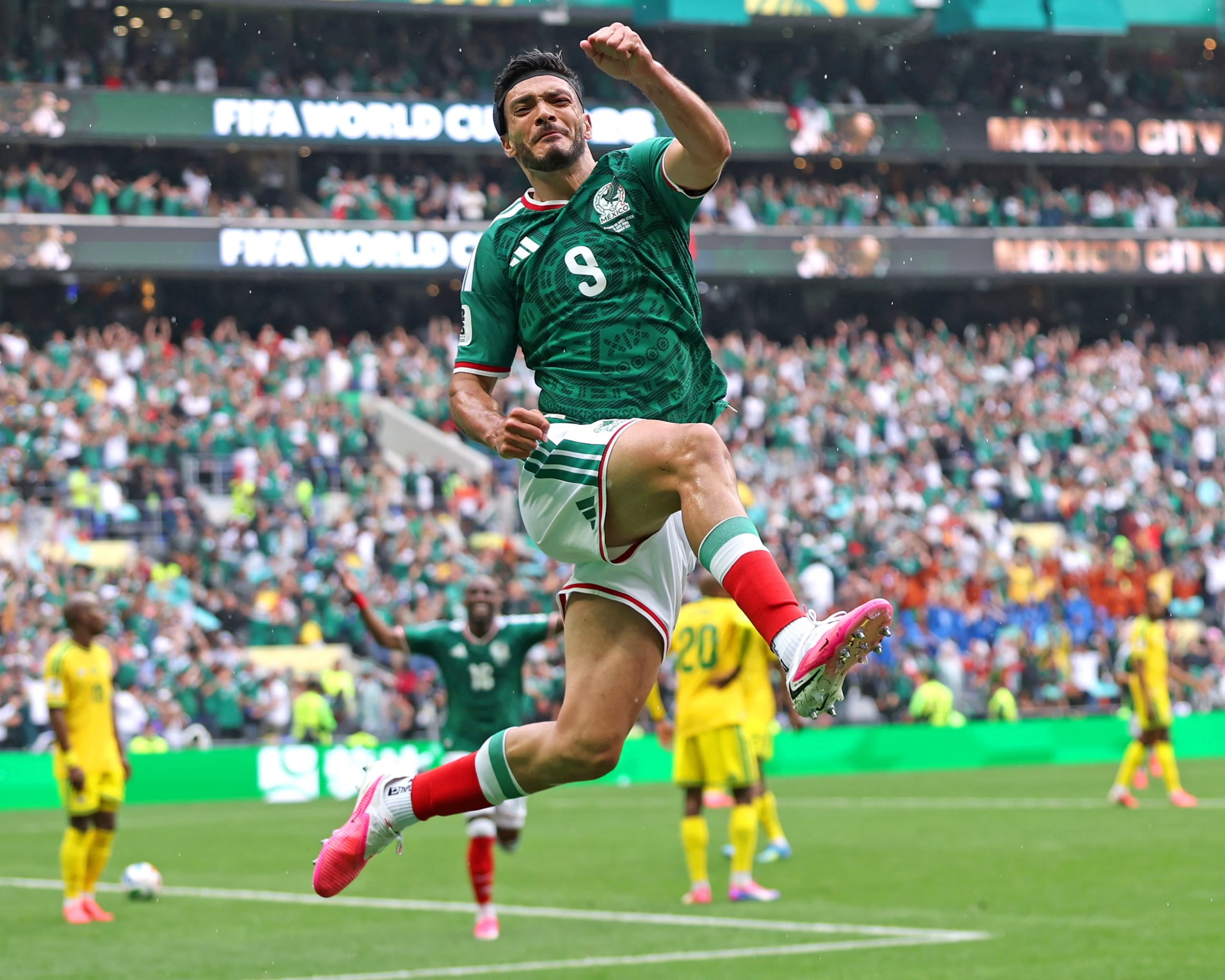
Was that it, then? Was Sphephelo Sithole being caught in possession nine minutes into the opening game, Julián Quiñones running on to lash the ball through Ronwen Williams’s legs, was that when the football took over, the moment when concerns over the aggression of the major co-host faded away and the world got on with celebrating the great festival of humanity the World Cup ought to be?
It seems unlikely. Donald Trump’s war with Iran goes on, as do the outrages of his immigration forces. But it’s not just that. Gianni Infantino has opted to run this tournament, uniquely in the modern age, without a local organising committee. That may not explain the shambolic organisation at the Azteca – the chaotic traffic, the non-existent signage, the absence of wifi, the general lack of order – but it does make it harder to fix. Not that Mexican fans cared much.
For all there were three red cards, this was an anodyne victory and, while there will be few lower bars to clear in this tournament than this extremely disappointing South Africa, they can already start looking forward to the last 32. “We were superior but the score did not reflect that,” said the Mexico manager, Javier Aguirre. “Things got a little complicated but we relaxed and we did start with a win. Can we make it better? Of course.”
“Football unites us all,” the voiceover at the start of the opening ceremony intoned, although not Somalian referees, Iranian backroom staff or indeed anybody who can’t afford to shell out thousands of dollars on a ticket. The football family these days is increasingly small and well-heeled.
At the 1986 World Cup, the stadium loudspeakers were suspended on cables over the centre-circle, casting a spider-like shadow that became one of the signatures of the tournament. There was a similar shadow here, at least in the two hours before kick-off, but it was cast by a huge Fifa sign that hung in dystopian style over the pitch. For the game itself it was swung into a position high in one stand, from where, like a corporatist version of Sauron’s Eye, it glowered unblinking on the scene before it.
Yet for all the reservations, the multitude of problems in the buildup, the geopolitical anxieties, there was no denying the splendour of the setting, the sense of history that rolls down from the steep tiers of the stands. The stadium has been renovated, but it retains enough points of familiarity that it’s easy to conjure epiphanic moments from the stadiums past: it was there that Pelé paused before rolling the ball outside him for the overlapping Carlos Alberto, there that Manuel Negrete took off for his bicycle kick against Bulgaria, there that Diego Maradona picked up the ball before embarking on the dribble that culminated in his second goal against England.